Recycling and Sustainability for Flat Clearance Earls Court
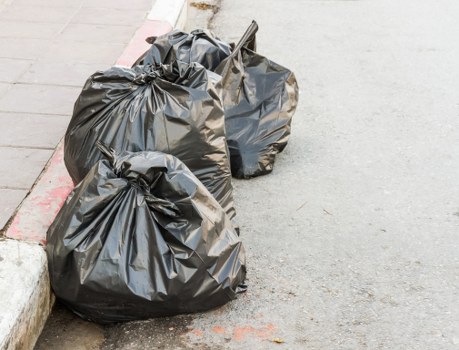
Flat clearance Earls Court services are evolving to meet modern environmental expectations. Our approach to an eco-friendly waste disposal area and a sustainable rubbish area focuses on measurable targets, local infrastructure, and partnerships that keep usable items circulating in the community rather than heading to landfill. This page outlines how responsible flat clearance in Earls Court reduces carbon, increases reuse and supports borough-level recycling schemes.Our commitment includes a clear recycling percentage target and transparent monitoring. We aim for a 65% recycling and reuse rate within the first 12 months of implementing our enhanced processes, with an ambition to reach 70% by 2030. That target covers separation at source, diversion of bulky waste to reuse channels, and careful sorting at authorised facilities. An emphasis on low-impact disposal guides every job, from single-room clearances to full flat clearances in Earls Court.
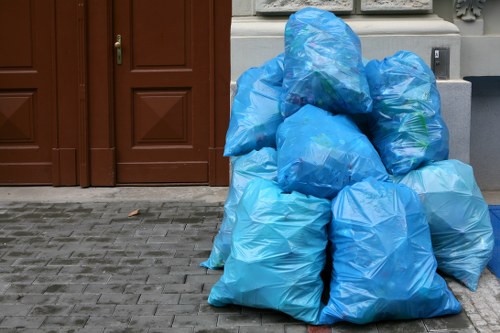 The service integrates with the local network of transfer stations and authorised sites around west London. We work closely with borough waste hubs and nearby municipal transfer stations that receive sorted streams of paper, glass, metal, plastics and food waste, as well as designated facilities for WEEE (electricals) and hazardous items. By routing materials to these local transfer points, the carbon footprint of transport is reduced and material quality for recycling is preserved.
Charity Partnerships and Reuse
One of the most impactful ways to create a sustainable rubbish area is to prioritise reuse. We maintain active partnerships with reputable organisations and local charities to redirect good-condition furniture, textiles and appliances. Working with these partners ensures items receive a second life and helps support community programmes across Kensington and Chelsea and neighbouring boroughs.Our charity and reuse network includes collaboration with national and local groups. Typical partners include:
- Housing and homelessness charities that accept furniture and household goods;
- Community reuse centres that refurbish and resell items locally;
- Specialist recyclers for textiles, electronics and metal components.
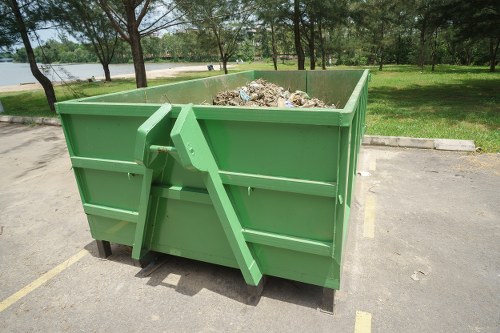 Boroughs in west London have long encouraged separation at source. The local approach to waste separation usually involves clearly labelled streams for glass, paper and card, mixed recycling, food waste and residual rubbish. We align our sorting protocols with the boroughs' guidance so that reusable items and recyclable fractions are clean, separated and ready for transfer—maximising the recovery rate and minimising contamination.
Low-Carbon Fleet and Route Optimisation
A low-carbon van fleet is central to reducing emissions from clearance work. Our Earls Court operations use a mix of electric vans, plug-in hybrids and the latest Euro 6 low-emission vehicles, supported by route optimisation software to cut unnecessary mileage. This approach helps create a genuinely eco-friendly flat clearance Earls Court offering and reduces air quality impacts in densely populated neighbourhoods.We monitor vehicle emissions and aim to reduce fleet CO2 by up to 40% compared with a standard diesel fleet through electrification and smarter logistics. For very narrow streets and short runs, we deploy cargo bikes and smaller zero-emission vehicles to deliver a quieter, greener service that respects local residents and the built environment.
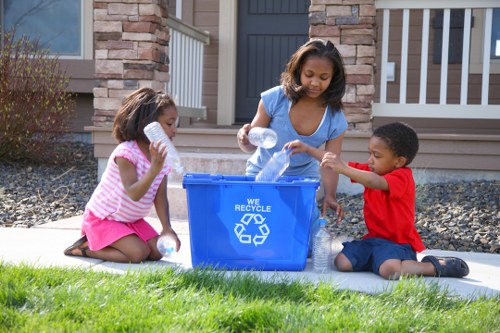 To support a recognised sustainable rubbish area, clear procedures for hazardous items and WEEE are followed. Batteries, solvents, paints and electronic devices are kept separate and transferred to licensed handlers. This minimises risk, improves recycling outcomes and adheres to duty-of-care standards while avoiding landfill-bound contamination.
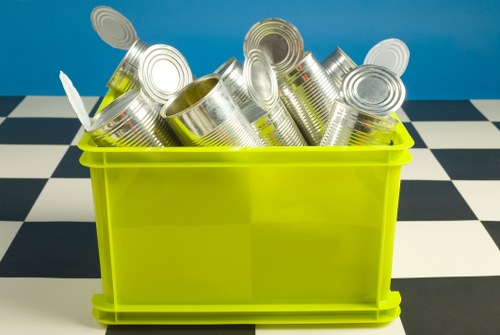 Operational transparency matters. We provide documented records of material flows and recycling rates for internal review and for stakeholders in the boroughs when required. Establishing dedicated staging areas for sorted materials during a flat clearance in Earls Court helps contractors and charity partners collect items efficiently and maintain high-quality recycling streams.
Creating a sustainable rubbish area demands collaboration: residents, property managers and clearance teams must prioritise reuse, accurate separation and the use of authorised transfer stations. Our strategy combines practical on-site sorting, charity partnerships, compliance with borough separation policies and investment in a low-carbon fleet to deliver an integrated, eco-conscious service.
In summary: responsible flat clearance in Earls Court means aiming for ambitious recycling percentage targets, using local transfer stations, forging charity partnerships, and operating low-emission vans. By committing to these principles we keep more items in use, cut carbon from transport, and offer an eco-friendly waste disposal area that aligns with the sustainability goals of local communities.